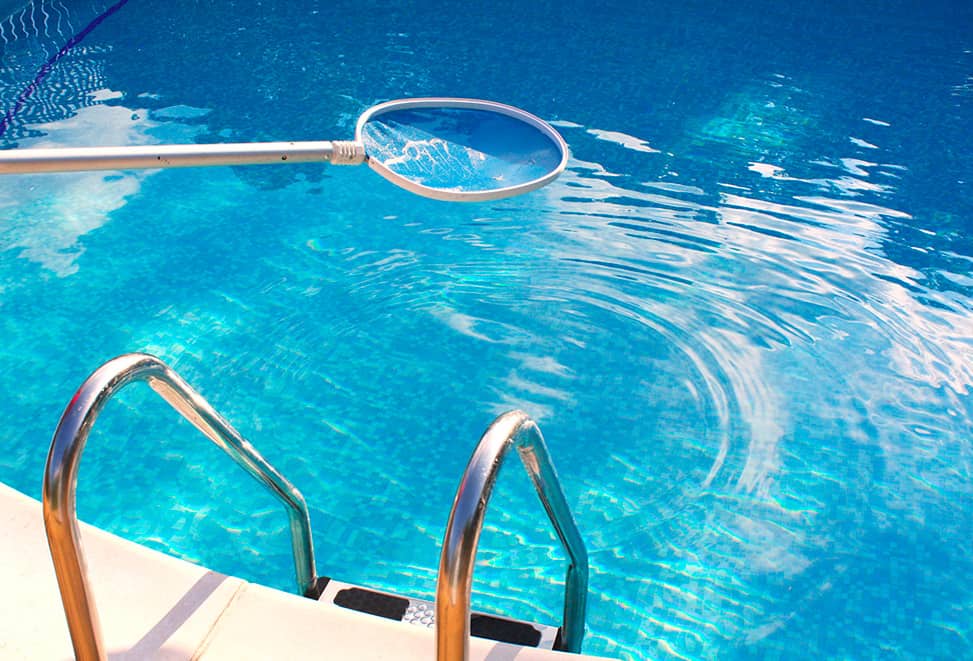
When your pool is heated, it is ready whenever you need it. That’s the entire purpose of a heated pool. However, warm water performs better than cold water. Sanitizers tend to be consumed quickly, algae has an early start, and a frequently used pool accumulates more debris than a rarely used one.
Maintenance of your heated pool consists mainly of maintaining an established regimen rather than occasional cleaning. Maintain balance in the water, maintain filtration, and leave a robot cleaner do all the work. Here is everything you need to know about maintenance, including how to take care of your robot cleaner.
Balancing water during times of high temperature
Begin with understanding the chemistry. It will not be easy to balance water that is out of balance, while the temperature is also increasing. According to the Department of Health in Western Australia, the minimum free chlorine level for stabilized outdoor swimming pools increases from 2 mg/L to 3 mg/L above 26°C. The regulations vary from one state to another, and you can get advice from your local pool shop.
Free chlorine test and pH test
- Do the free chlorine and pH tests at least once a day when the water is warm or when people are using the swimming pool.
- Maintain a pH level between 7.2 and 7.8.
- Always add chemicals only when nobody is in the water, and then wait for 30 minutes before allowing swimmers.
Heavy rainfall, large number of swimmers and addition of chemicals causes the pH level to vary.
Filtration and circulation
Your filter must cycle through the entire volume of your pool every six to eight hours. Moreover, it should continue circulating the water for an hour after the last swimmer leaves the pool. Clean the filter when the pressure rises or the flow of water via return jet diminishes, and remember to read the instruction manual.
Having a robot that has its own filter will ease the pressure on the central filtration system because the robot will gather the small particles of dirt that have accumulated in the pool.
In case algae appears
Simply brush the surfaces, adjust the levels of chlorine and pH, and then vacuum the algae the following day. Avoid removing the algae using the filter system.
Weekly cleaning routine that works
Little chores done regularly are always better than one major weekend clean-up. A basic schedule would look like this:
Skim the surface and clean skimmer and pump baskets. You do this more frequently during leafy season.
Brush the steps, corners and tile line, the areas where cleaners cannot reach well.
Take samples of water and check pressure at the main filter.
Operate the robot cleaner on days convenient for you to clean your pool.
Right after hosting a party or a school holiday weekend, test chlorine levels first and operate an additional clean-up cycle the next day to clean everything the swimmers left behind.
Here is a very basic sample. You skim, brush the steps and take water samples on Saturday. Then on Sunday morning, you operate the cleaner and empty the filter. During the mid-week, you take samples again and operate another cycle. That is fifteen minutes of work to be done and your pool will stay ready to swim.
Aligning routine care with pool use
Pool usage dictates the routine rather than the schedule. Here are three examples that will explain.
Daily family swims
The sunscreen, body oils, and lots of splashing increase the burden on your chlorine. Daily test results, frequent cleaning cycles, and post-cycle filter checking are required.
Tree-covered pool
The leaves have a tendency to fall suddenly. Remove the bulk manually before running the cleaner. If there are too many leaves in the pool, the cleaner’s filter might have to be cleared midway through the cycle.
Usage on weekends only
Even though the pool remains idle during the week, it still requires cleaning and testing. Idle warm water becomes a great breeding ground for algae.
The role of the robotic cleaner in pool maintenance
Robotic cleaners cover the floor, walls, water line and stairs of pools in most cases. It cannot take the place of chemistry and filtration. The task of the robotic pool cleaner is to pick up dirt from the surfaces so that the filter and sanitiser can tackle the dirt.
Frequency of running the machine
Two to three times a week should be sufficient in case of an actively used pool. Do the cleaning operation daily in leaf season or after the intensive usage of your pool. Remember to check the filter after each cleaning operation. If it remains clean enough, you may reduce its frequency.
Pre- and post-operation routine
Pre-operation routine:
- Remove big leaves and debris from the pool. Overload will result in a rapid clogging of the filter.
- Make sure that there is enough chlorine and proper pH in the pool. Instructions for troubleshooting provided by the manufacturer include algae and improperly balanced water among causes of poor cleaning performance.
- Arrange the cable properly.
Post-run:
- Disconnect the power and retrieve the cleaner.
- Dump the dirt from the filter and clean the panels using a garden hose. It is recommended that this be done after each operation.
- Clean the brushes and exterior of the machine to get rid of the chlorine.
Store in shade, away from sun, rain, frost, and loosely coiled cord.
The above tips for robotic pool cleaners repairs take around two minutes and safeguard the suction system, brushes, and cord.
Water temperature limits check
Please find if there is any limit set for the water temperature in the manual. This will be very important if you have your heater on during the summer months.
When to inspect the actual cleaner
It is natural for brushes, tracks, filters, and cables to wear down due to use. Chlorine and exposure to sunlight accelerate the process, hence the need for rinsing and shading. An inspection once a month is recommended.
| What you notice | What to check | Part involved |
| Slips on walls or misses spots | Brush wear, track wear, a clogged filter | Brushes, tracks |
| Dirt left behind, weak movement | Filter basket or bag blocked or torn | Filter basket or bag |
| Cable twisting or cracked | Cable condition and swivel | Cable |
| Grinding noise or slow drive | Debris around the impeller, worn bearings | Bearings, impeller |
When selecting parts for the robotic cleaner, it is important to pay attention to compatibility of parts with the model since different models may vary in their size. Firstly, look at the model number located on the top of the cleaner. Next, select parts and make sure that they fit before you purchase them.
If the cleaner stalls even with new parts, a specialist will be able to diagnose the problems which cannot be spotted by a naked eye.
Selecting a cleaner that fits your needs
There is no one best robotic cleaner near me for all pools. Size, shape, and surface determine the right fit. Use this checklist to filter out the possibilities:
- Rated pool size versus actual pool length.
- Coverage: floor, walls, steps, and waterline.
- Type of filtration and ease of accessing/emptying it.
- Cleaning times and modes.
- Cable length and a swivel to prevent tangling.
- Warranty and ease of obtaining replacement parts.
Comparing the various options is key. You can do a side-by-side comparison of some of the existing models of Dolphin cleaners that have been designed and see which specifications fit your checklist. A reputable supplier would ask questions about your pool before recommending a product.
FAQs
Is it possible to swim in the pool if the robotic cleaner is running?
No. People have to avoid getting into the pool until the cleaning process finishes and the cleaner is turned off and lifted from the pool.
Should I get a pool cover for my heated pool?
Yes. The cover reduces evaporation, which happens more frequently for a heated pool, and keeps water in the pool. In summer, pay attention to algae growth as the pool cover might increase the temperature of the top layer of the water. It is better to consult a pool technician.
Is it safe to use the robotic cleaner if the water color changed to green?
No. It is necessary to take measures to make the water clean again. Clean the pool, balance the chlorine and pH level, and then run the cleaner to collect the accumulated debris.
Will the replacement part match the robot cleaner?
It is necessary to use the model number. Different models of cleaners need different parts, although they belong to the same manufacturer. If there are problems with the model number, it is possible to ask the supplier about it.